

A useful taxi enquiry starts with the exact pickup and destination, departure date and time, passengers and luggage. The Vietnamese article covers local residents, visitors and business travellers, with examples of city rides, airport transfers, nearby coastal destinations and intercity travel.
It describes Private Taxi Ho Tram as a provider of vehicles with a driver, mainly four- and seven-seat categories for this article. Claims of the lowest price, guaranteed safety, recent vehicles or immediate dispatch are promotional assertions without independent evidence in the source. Compare the specific vehicle and written offer for the actual trip.
Journeys described in the source
Within Vung Tau
Front Beach, Back Beach and Ho May are named as local destinations. State the exact entrance, hotel or meeting point. A ride to an attraction does not establish admission, opening hours, permitted access or a tour package. For several stops, agree waiting, the itinerary and the finish time.
Nearby coastal and intercity travel
The article mentions Ho Tram, Long Hai, Ho Chi Minh City, Binh Duong and Dong Nai. It also describes longer journeys to Da Lat and Phan Thiet. Give complete addresses and any return date rather than treating a city name as enough to price the trip.
Tan Son Nhat airport
For an airport request, include the flight number, terminal, date and required arrival or pickup time. Confirm the meeting point, waiting, parking and flight-delay arrangements. A source promise that no flight will be
missed is not a reliable travel-time guarantee.

Source VND fare references
The first row is a per-kilometre local reference; later rows are route amounts. Those units are different. The table does not define a complete meter formula, minimum charge, all inclusions, waiting or a return schedule.
Route | 4-seat category (VND; first row per km) | 7-seat category (VND; first row per km) |
|---|---|---|
Local Vung Tau reference, per km | 15.000 VND/km | 18.000 VND/km |
Vung Tau–Ho Tram | 450.000 VND | 500.000 VND |
Vung Tau–Long Hai | 300.000 VND | 350.000 VND |
Vung Tau–Ho Chi Minh City | 1.200.000 VND | 1.500.000 VND |
Vung Tau–Tan Son Nhat airport | 1.100.000 VND | 1.400.000 VND |
Vung Tau–Binh Duong | 1.300.000 VND | 1.600.000 VND |
Vung Tau–Dong Nai | 900.000 VND | 1.200.000 VND |
Vung Tau–Da Lat | 3.500.000 VND | 4.200.000 VND |
Vung Tau–Phan Thiet | 2.200.000 VND | 2.800.000 VND |
The amounts are retained from the Vietnamese article for review and are not a live quote or independent USD tariff. Exact endpoints, date, vehicle and itinerary affect the actual proposal. A destination name does not automatically cover every address or the reverse direction.
What the complete price should cover
The source promises no hidden charges but also says peak periods, holidays, Tet, distance and vehicle choice can change fares. Ask for one clear written total and the conditions under which it may change. Confirm fuel, tolls, parking, waiting, taxes and extra stops rather than inferring them from a route amount.
Advance-booking and repeat-customer promotions are mentioned without full values, dates or eligibility. Request current conditions and whether offers combine. No discount or best-price guarantee is created by this draft.
The table's four-seat and seven-seat categories are price labels, not proof of capacity on the vehicle eventually offered. Choosing one larger car instead of two smaller cars may be worth comparing for a group, but it is only suitable if the usable seats and luggage layout are confirmed.
Vehicles, comfort and service checks
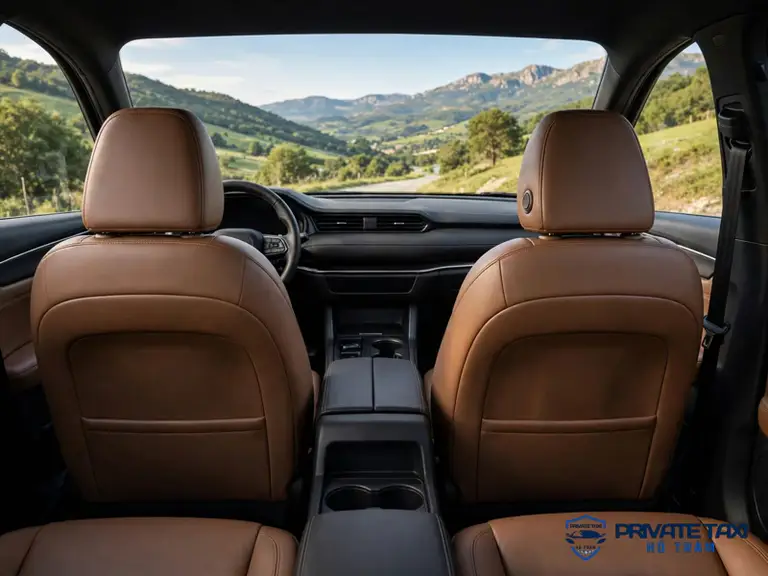
The article advertises clean, recent vehicles with air conditioning, regular maintenance and drivers familiar with Vung Tau. Ask about the actual model and any feature important to the journey. A promotional fleet photograph is not proof of current ownership, vehicle age or availability.
Confirm the number of passenger seats excluding the driver, bags and any child-restraint or accessibility needs. A category name or a statement that taxis carry more luggage than coaches does not settle the limits of a particular vehicle.
The source presents 24/7 support and pickup within minutes as advantages. Those claims need operational confirmation for the actual date and location. An early enquiry or a request sent days ahead does not itself guarantee a car.
Requesting and confirming a ride
Give both addresses, the date and preferred time, including an arrival deadline if relevant.
List passengers, bag sizes and any specific vehicle requirements.
Specify a direct transfer, return trip, several stops or longer hire.
Review the vehicle proposal, total, inclusions and current change or cancellation terms.
Check the confirmation, driver contact and agreed meeting point before payment.
The source lists telephone, website, Zalo, Facebook and an application. It also promises live tracking through an application, but supplies no verified current application listing here. Use current official website channels and confirm any tracking or application feature rather than directing customers to an unverified download.
A quotation displayed online should be reviewed with the exact journey details. If a valid price is unavailable, request a quote. Missing pricing is not a free trip, and submitting a form does not itself confirm allocation.
Regular travel and contract hire
The article describes daily, weekly and monthly contracts for companies, specialists, business travellers and families. It also mentions longer tourism hire and regular airport journeys. A contract should state the route, schedule, vehicle, waiting, distance, responsibilities, payment and current change or cancellation terms.
The source suggests contract hire may cost less than separate rides and avoid waiting. Those benefits depend on the actual proposal, not the existence of a contract heading. Compare the complete commitment and any minimum term before agreeing.
Practical checks for a trip
Use verified operator contact details and match the driver and registration to the confirmation.
Review the agreed total and any additional-charge conditions before travel.
Use a map to understand the route while allowing for restrictions, traffic and agreed stops.
Keep bags and valuables secure and check the vehicle before leaving.
Retain the trip confirmation and operator contact for follow-up.
The source treats logos, uniforms and meters as ways to identify a legitimate taxi. They are not sufficient proof on their own, and a pre-agreed private transfer may use a different pricing arrangement from a metered street taxi. Verify the operator and booking rather than relying only on visual branding.
Comparing a taxi with a coach
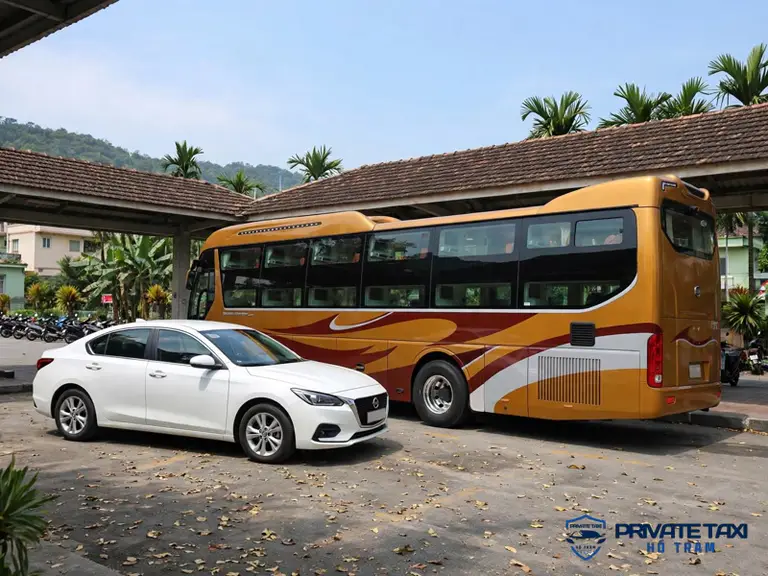
The source favours taxis for pickup flexibility, privacy and direct travel. Compare actual coach departures, transfer access, permitted luggage, stops, total travel time and group cost. A private vehicle is not automatically faster, cheaper or able to carry unlimited bags.
Agree whether the proposed car is exclusive to your group. Group travel within a single reserved vehicle does not mean sharing with unrelated passengers, and any change to that arrangement should be stated clearly.
Frequently asked questions
Does a low headline rate establish the final fare?
No. The source mixes local per-kilometre figures and route prices without complete inclusions. Request the actual written total for the date, addresses and vehicle.
Can a trip be requested for a group?
The source focuses on four- and seven-seat categories. Give the number of passengers and bags, and confirm the capacity of the specific vehicle offered.
Is a car guaranteed when booking ahead?
Advance enquiries help planning, but a current confirmation is still needed. Check the vehicle, meeting point and terms instead of assuming that an enquiry alone reserves a car.
Contact and trip requests
For an enquiry, call 0565.669.339 or 0931.472.972, use the English contact page, or read how to request a ride online. Ask for written confirmation of the actual trip details, vehicle and total price.